


Multiple approach to improving the supply chain, Part II
Collect Clean and Comprehensive Data for Better Decision Making
Food | Medicines
Multiple Approach II As discussed in the first part of the article, there are three key strategies in Sensitech's Multi-Approach to maximizing the efficiency of supply chain data to improve product quality and operational efficiency.
This article takes a look at the first strategy, which focuses on the importance of collecting clean and comprehensive data to achieve measurable improvements and the second strategy, using data to facilitate smart decision-making. Here are some examples of how our customers are using these strategies today. Multi-approach
Data need to be comprehensive but not irrelevant
Data analysis is as good as the data itself. Poor quality data can really lead to bad decisions, which can be costly. That#8216 why we help our customers ensure good data collection is the right time.
For example, we have helped many customers monitor temperature-sensitive products, switch from manual devices to automatic data-sending devices, equipped with radio frequency and real-time capabilities, so that they can be more proactive and save labour costs. For better analysis, these customers increase the time, temperature and location data with other supplementary data from telematics, as well as shipping information from ERP, transport and logistics systems and product quality information. These companies can now automate data collection and integration, which saves costs and improves data integrity. Multiple Approach II
With the help of real-time technology and data management, customers can integrate analytics into their business processes and switch from tactical decision-making to better strategies, which can have a direct and indirect impact on improved quality and functions.
Full visibility from farm to fork.
A large chain of fast restaurants was among the first to adopt temperature and location monitoring sensors by automatically sending data, real-time and soon took full advantage of the, what Internet of Things technology offers (Iot).
With IoT-based sensors, the restaurant chain applied data reception automatically. Temperature data, light and location give the company significant visibility in the supply chain of the, so that it can react proactively to violations of. For example, with real-time notifications, the chain can now intervene immediately when temperature and transport problems arise. He also understands, the performance and performance of the routes and, most importantly, the, was able to reduce discarded loads and product loss. Multiple Approach II
IoT devices travel with the product, rather than with the driver, trailer or unit and allows real-time monitoring of the entire chain, from suppliers and distribution centres to restaurants. With integrated end-to-end visibility and automated segmented data analysis, it is easier for the company to identify where cold chain and logistics interruptions are occurring, something that helps the company reduce labor costs, improve response time and reduce product loss.
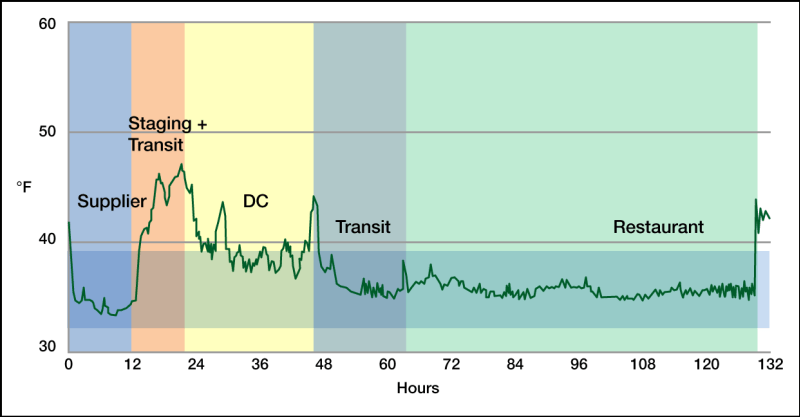
Image 1: Ειδοποιήσεις σε πραγματικό χρόνο από τους αισθητήρες Iot που επιτρέπουν στον πελάτη να επεμβαίνει άμεσα όταν γίνονται οι παραβιάσεις ορίων θερμοκρασίας.
Faster identification and troubleshooting.
Sensitech conducts regular reviews of customer data and makes suggestions on how to improve our customers' supply chain visibility programs. In this example, we used analytics to identify a problem in the shipping section of this customer's cold chain.
This fast restaurant chain experienced higher than desired temperatures on some of the routes where frozen french fries are shipped via rail cars. Sensitech carried out an on-site assessment of the cold chain, where we used recording files to collect product data and ambient temperature #8216 throughout the shipment of products. We also observed the shipping process and used time and temperature data to determine that carbon dioxide (Co2) used to cool the product during the transport of the, finish before it reaches the shipping destination.
The customer decided to no longer use CO2 rail cars and with this transport change, temperatures on missions have improved dramatically.
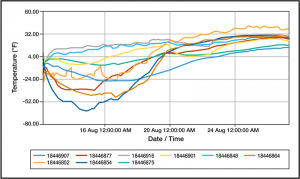
Image 2: An on-site analysis and review of the data helped identify the source of violations in this customer's temperature limits.
More effective role-based decision-making.
A major U.S. food distributor has incorporated data into the decision-making process in almost every aspect of the supply chain. Customer takes advantage of Sensitech visibility platform to help food safety managers, and for the transport of products, to make decisions on day-to-day work on incoming, Outgoing, storage and operational transport services.
These administrators can document and perform corrective actions for overruns, data reported and consumed in real time and accessed through a dashboard. They also have access to analytics that help identify trends and identify the causes of exceptions for faster decision-making. Multiple Approach II
From the control panel, administrators have access to all the tools they need to manage the day-to-day business, while corporate and regional administrators gain extensive data visibility for strategic reviews at executive level. Multiple Approach II
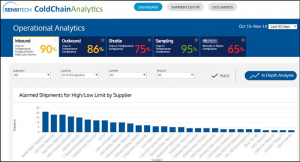
Image 3: The analysis of temperature alerts, helped this company take corrective actions and reduce temperature limit violations over time.
Improved product quality in incoming loads.
Sensitech helped a leading UK supermarket chain switch from conventional tracking devices, real-time transmission devices for incoming shipments from various suppliers to the distribution centres of the. The aim was to use real-time data to achieve greater efficiency and improved quality in the download process.
The supermarket chain has also completed, the integration of the system where product information and logistics details from the ERP system, automatically connected to the monitoring devices. This allowed them to collect a more powerful dataset to drive even more improvements.
Support from Sensitech
- Sensitech also helped this customer develop and implement a traffic light alert system that could be used as a test method to assess the product that has suffered temperature violations and address transport delays.
- The notification system categorizes shipments based on the severity of the temperature limit violation and transport delays. For example, a green light indicates a product that is 100% Acceptable, while orange means that the product has questionable quality and red means that the product has experienced a temperature limit violation or an incident that makes it unacceptable. This achieves the improvement of product quality in incoming loads.
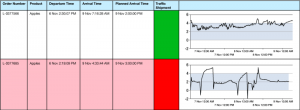
Image 4: The customer uses a traffic light warning system to help them make decisions to reject or accept the load.
The ability to evaluate incoming loads in this way significantly improved the efficiency of the download process and, Finally, the ability to make better decisions at dock level.
In the next and last article in this series, share how data information can be used to improve cooperation in the supply chain. You missed the first part, a Multiple Approach to Improving and Optimizing the Supply Chain; See it here.
Source: Sensitech Inc..