



Improve the Cold Chain and Answers to Questions
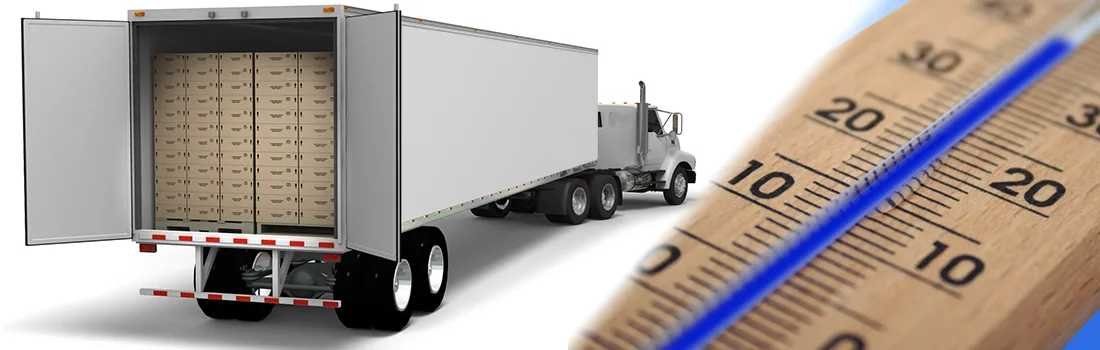
The Sensitech® It is known in the industry for its data recorders TempTale® monitoring devices. It has a team of experts in different areas such as cooling, food and life sciences, Logistics and the process of improving the cold chain. The team offers services and support to our customers, for the continuous improvement of their supply chain. Over time, the Specialized Service and Programming Teams, in food, of Sensitech, receive a number of questions from our customers to identify the causes of temperature problems:
Question: What steps should be taken when a TempTale recorder indicates temperature problems;
Response: Contrary to the widespread view, temperature problems in cooling vehicles are not often due to the proper operation of their equipment. Most likely, they come as a result of a problematic process. The following five steps, show the usual procedure, to find the causes of temperature problems and improve the cold chain. Follow these steps and ask yourself the following questions!
STEP ONE: Record the programming of the refrigeration unit
- What temperature setting limit was used?;
- There is evidence to suggest that the temperature setting limit or the operation of the refrigerator changed or that the unit was closed during transport;
- What cooling mode was used? – Continuous operation or fuel-saving mode; Continuous operation keeps the cooling compressor running and makes small settings that result in very stable temperatures. Fresh consumables should use continuous operation. Fuel-saving mode allows temperature fluctuations.
- What defrost setting was used;
STEP TWO: Get loading temperature documentation
If possible, get a shipping file for the product temperature at the time of loading.
If the sender cannot provide load temperature files, is an indication that no care may have been taken to ensure that the loading was made at the appropriate temperature. When the center of the pallet is warm and the outside is colder, this is often an indication that the product was loaded hot.
STEP THREE: Record how the product was loaded into the trailer. Proper loading is important to ensure good airflow throughout the trailer.
- The stack of cargo goes beyond the red line of the trailer;
- If the trailer does not have a red line, The distance between load and roof allows free flow of air;
- The pallets touch the walls of the trailer; For shipments in Europe, This is common as the dimensions of trailers and pallets, leave little free space. The ideal would be to have a gap between pallets and walls so that the airflow circulates freely, thus preventing the transmission of temperature from the walls to the products.
- What settings were used to defrost;
STEP FOUR: Record trailer status
- It's the air conduit damaged.; A damaged air conductor can stand in the way of free air circulation throughout the loading area. Most of the air supply remains at the end of the refrigeration unit and does not reach the other end, where there is the door. Poor airflow is often the cause of a temperature increase at the end of the trailer door, resulting in high temperature limit records. We will get the same results if there is no gap between loading and roof.
- There are damage to the walls, on the roof, on the floor or doors;
- There are gaps made by damage, on trailer doors;
- Are the drains okay?; They allow water to be expelled outside, while preventing air loss;
STEP FIVE: Record the signs that the doors opened during the trip
- The temperature graph TempTale shows a spike in temperature rise during transportation; (Not to be confused with defrost spikes)
- If you use TempTale Geo, There are light sensors. See if there are signs of light.
- Did the trailer stop during the trip for extra loading?;
- Did the trailer arrive without a seal or with the door seal broken?;
Question: Why are there differences between the temperatures measured by the refrigeration unit and TempTale?;
Response: Refrigerated trailers are designed to circulate cold air throughout the load, supplied by the refrigeration unit at the front of the vehicle. Air flows down, around the cargo and there is a chance, depending on the type of packaging, air circulates between the load.
As cold air passes over the inner surfaces of the trailer and product, Thermal energy entering the trailer from the outside is absorbed by trailer surfaces and food products. Air returns along the floor back to the refrigeration unit. The thermal energy absorbed by the circulating air, Eliminated, Then, to the outside of the trailer from the refrigeration unit.
Consistency in stable operating processes
Stopping air circulation will result in warm areas on the trailer. Generally, The warmest seats will be located at the end of the trailer door, as they are farther away from the refrigeration unit. The exact location of the hottest spot may vary due to certain factors. Such as stopping airflow, pallet loads, The condition of the trailer, the position of the trailer in relation to the sun, etc. The recommended location for mounting the TempTale logger, It is located on the back pallet, on the right side (to the door) at eye level. This proposed placement is based on the above trends combined with some practical considerations around ease of installation and recovery, providing consistency in stable operating procedures and avoiding damage to the device.
The temperature readings recorded by the refrigeration unit are usually the supply air and the return air. If there is poor airflow in the trailer caused by excessively high pallet arrays, Air may accumulate at the front of the trailer. That is there, Where is the measurement of return air taken?. As a result, There will not be sufficient airflow to remove heat penetrating the trailer at the rear of the trailer, where TempTale measurements are usually taken. Readings from the refrigeration unit generally will not reflect this problem. TempTale data will alert the user to temperature problems due to both improper air supply temperature and insufficient air circulation.
Source: Sensitech Inc..