


Temperature Logger Selection
Temperature Logger Selection
Data loggers are widely used by contractors, Service technicians and engineers responsible for monitoring internal environmental conditions, To investigate and regulate temperature limits and assess HVAC / R (Heating / Ventilation/Air conditioning systems / Cooling).
Data loggers, They are also used by researchers scientists, Ecologists and hydroologists for remote monitoring of soil temperature, of air and water. Data loggers, In most cases, They are easy to use and can be used as standalone devices without a computer. The most important, the measurement accuracy offered by the most technologically advanced, Modern data recorders compete with the performance of many, More expensive systems, Computer-based.
However, Not all temperature data loggers of the same capabilities. The variety available today, Makes choosing the right graphic difficult.
You need to measure a range of conditions or a single parameter; Does your app require an alarm alert when conditions exceed a certain limit; The logger you choose should withstand a harsh environment; It needs to be waterproof and exposed to weather conditions; How often will you need to get the data from the device; You will view the collected data on a computer or mobile phone;
Whether you are an experienced data-sharing user, Either a beginner, This article can help you make the right choice. Highlights the most important points to keep in mind and offers advice on specific features.
Select Temperature Recording and 5 things to know:
Know the precision requirements
No matter what you need to measure, Understanding precision requirements is essential and important. For example, If you're watching an office space that's air-conditioned, It may be enough to measure accurately +/-1C. However, if measurements are to be made in a research laboratory, more accuracy may be required.. Or when water currents are monitored for their suitability for special species of fish, For example, The accuracy of the measurement typically required is 0, 2C.
Accuracy specifications vary widely between different types of data recording. So understanding the specific requirements on a case-by-case basis will protect you from spending money for an accuracy you don't need. Pay attention to the specifications of the log and make sure that you have studied the graph showing measurement accuracy across the measurement range and is not just a value.
Another important factor is the analysis of the. This is the number of increasing prices, that the recording has the ability to record.
I.e, a 12-bit resolution recording can report 4.096 values in a given temperature range. While a 16-bit recording can provide more resolution than a 12-bit. But remember that higher resolution doesn't necessarily mean better measurements..
If you're not sure about the accuracy of the log given and the analysis requirements of your app, an experienced data recording provider will be able to help you obtain the right recording for your own needs.
See the technical specifications of a temperature record, clicking Here
Predict your data access needs
With the simplest data records, temperature data is transferred to a computer through a USB port. In many cases, however,, it is not practical to bring a computer to an external installation or it is not always convenient to bring the recording on the desktop. In such cases, stand-in , which transfer their data for printing to a portable pocket printer (TripStrip® Remote Printer ).
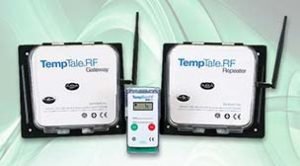
Wireless temperature data records transfer real-time temperature and relative humidity data from dozens of locations to a central location. With some settings on the network, the manual retrieval of data and the transfer of data from the network's.
Internet-based data capture systems, support access to temperature data or other type of, via mobile phone, Wi-Fi or Ethernet. This data is managed with a wide range of plug-and-play sensors. Data is easily accessible via a secure website or integrated into custom systems with a relatively simple in-app set of internet services.
Look for time-saving features
Time is money. So make sure the recording you chose has the features to make the process easy and reliable. And here are a few points you should watch out for..
- Memory Size – Make sure your log has enough memory to allow more records with fewer visits to installations. Low-cost recording files store 6.000 sufficient for some applications. Longer applications or faster recordings require more memory.
- Flexibility of use – As temperature records are used in a wide range of different environments and spaces, often need a different way of mounting. Look for the options provided by the recording: E.g. hook to hang, Magnet, double-sided sticker on the back of the device. Proper placement of the recording systems ensure their reliable use.
- Durability – Choose reliable recording systems that withstand harsh conditions. Extreme weather conditions, immersion in fresh or sea water, if required.
- Data view – Temperature records with LCD monitors allow you to view their function, battery status, possible alarms, without having to connect to a computer.
- Start Keys & Stop – A recording that you can start or stop or take a data view with the pressure of just one key makes your life easier.
- Device Upgrades - A Recording (Multipurpose) that you can upgrade on the spot without sending it back to the manufacturer is preferable.
Do not ignore the software
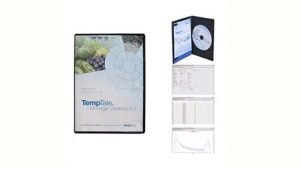
As there are different types of temperature records, there are different types of data graphics and analysis software., according to your needs and easy to use so you don't need to learn. The software should provide easy access to the data and quickly perform tasks such as configuration, starting the recording data transfer. Choose simplicity. There are softwares that read hundreds of loggraphs very quickly.
A software should also provide strong data design. Easy merge, data transfer and analysis. It should be able to export data to different files such as Microsoft Excel for further analysis.
Consider power requirements
Temperature records are very low power devices. But because they are used in a variety of environmental conditions, battery life may vary. Select a record that the Battery lasts at least one year.
Example of Temperature Monitoring Application
Temperature monitoring in cold chain warehouse
High quality/safety is required under food conservation regulations. Temperature data recordings must also be reliable
Using multiple recording files is the solution. The recordings are made every 5 Minutes. The analysis of the data is done according to the needs of the company.
As a result of the surveillance we have alarms from any temperature limit violations, with a time stamp of the event from the temperature log. Also, with monitoring we know that the appropriate temperature levels have been maintained. We have real-time temperature data displayed on the LCD screen.
Sensitech Data Recording
The Sensitech® has a wide variety of data files suitable for different sectors, (Pharmaceutical companies, Food Industry etc.). Temperature and humidity data recorders are accurate. Collect valuable information about temperature-sensitive loads. They are reliable electronic devices, ideal for decision-making and greater clarity in the supply chain.
Our recording systems are designed, manufactured and tested with strict quality control. Each recording TempTale® temperature and humidity monitor / temperature and humidity, Accompanied (on demand) with NIST certificate® traceable validation certificate / verification certificate.
The EcoHellas.gr, is the exclusive representative of Sensitech Inc., USA, for Greece and Cyprus. Contact Us, for more information about our products and services.